


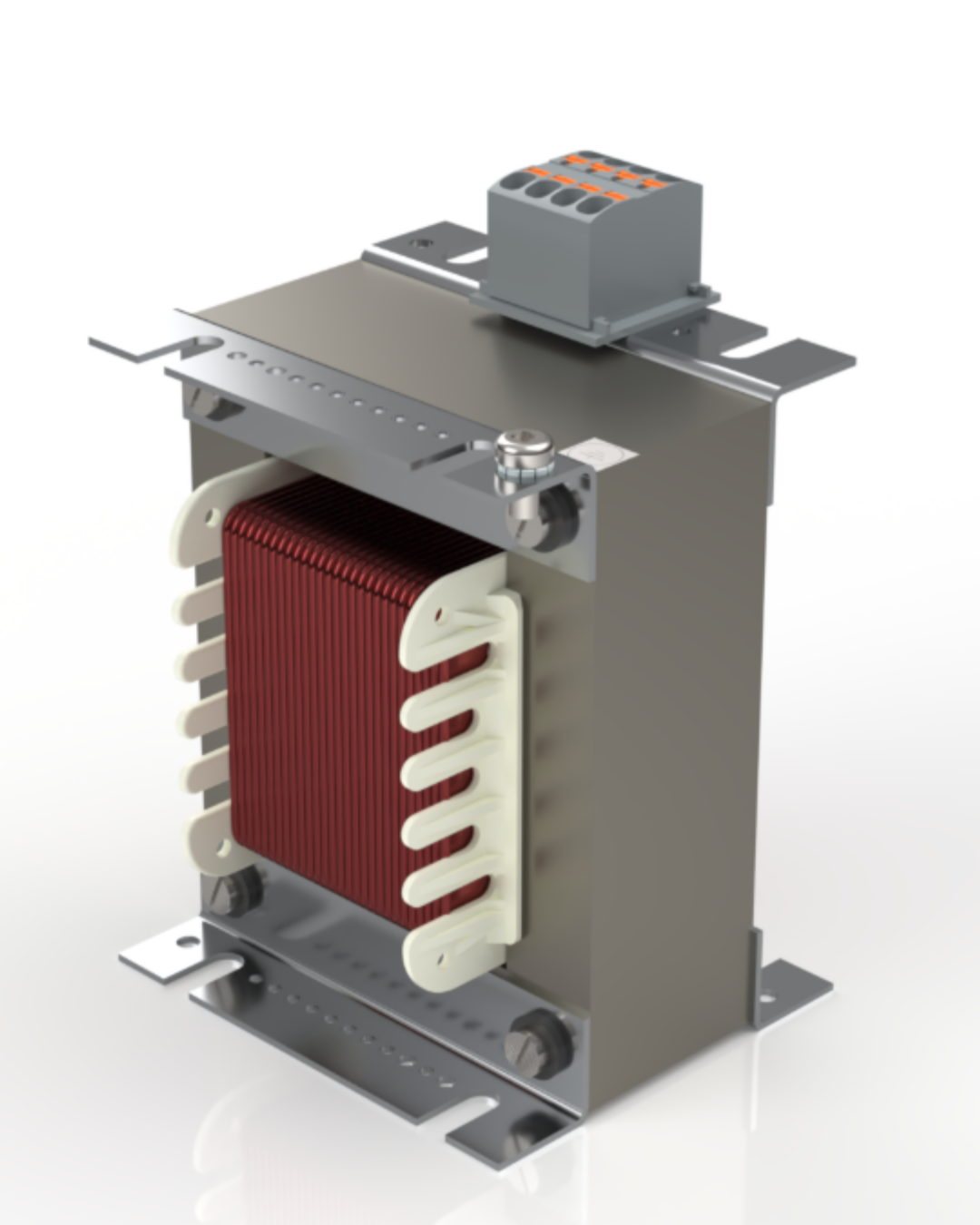
When it comes to electrical safety and protecting both people and sensitive equipment, two terms frequently arise: safety transformer and isolation transformer. Since both are based on the principle of galvanic isolation, it is easy to confuse them. However, choosing the wrong type can, in the worst case, result in safety requirements not being met. In this article, we clarify the concepts in a simple way, explain how they work, and help you choose the right transformer for your next project.
When Is a Safety Transformer Used?
In short, a safety transformer is a special type of transformer used to protect people and equipment from dangerous electric shocks.
Its primary function is to separate the electrical equipment from the regular power grid. Through so-called galvanic isolation, it ensures that current cannot pass through a person to ground if a fault should occur. It simply acts as an additional safety barrier in demanding or hazardous environments.
You will typically find safety transformers where safety requirements are particularly high, for example:
- On construction sites and in workshops.
- In humid or wet environments.
- In medical technology and laboratories.
What Is an Isolation Transformer?
An isolation transformer is a transformer used to create a safe, electrically isolated and interference-free zone for your equipment.
Its primary function is to break the direct physical connection to the power grid’s ground. Through galvanic isolation, it maintains the voltage (typically 230V or 400V), but ensures that the current becomes “floating.” This means that a first ground fault does not become dangerous and that electrical interference from the grid cannot reach sensitive machinery.
When Is an Isolation Transformer Used?
You will typically find isolation transformers where the goal is to protect sensitive technology or perform safe measurements, for example:
- In laboratories and test rooms during service and testing of electronics.
- To protect sensitive data and audio equipment from grid interference.
- In marine environments and boats to prevent galvanic corrosion.
The Critical Difference = Voltage
If both isolate the current, how do you know which one to choose? The most significant difference lies in the output voltage:
- The safety transformer always reduces the voltage to an extra-low and safe level (max 50V, but very often 12V, 24V, or 42V). It is designed for maximum personal protection.
- The isolation transformer maintains the voltage as it is (typically 230V or 400V). It protects the equipment and prevents ground faults, but the voltage itself is still high.
Quick Guide: Which Transformer Should You Choose?
| What do you want to achieve? | Choose this type |
|---|---|
| Protect people in confined, damp, or conductive environments (e.g., inside a metal tank). | Safety transformer |
| Power lighting or tools on a demanding construction site. | Safety transformer |
| Eliminate noise, power line interference, or ground loops in sensitive electronics/audio systems. | Isolation transformer |
| Perform safe measurements on 230V equipment in a laboratory or test bench environment. | Isolation transformer |
Tramo Helps You Choose the Right One
Choosing the right transformer is not only about function, but about meeting applicable electrical safety requirements and standards. Since we both design and manufacture transformers ourselves, we can tailor a solution that fits your exact specifications. Whether you need a standard model or a fully customized product.
Do you need guidance for your next project? Contact us today, and we will help you find the right solution!